
Sleep Calculator FAQs
How long is one sleep cycle?
A typical sleep cycle lasts about 90 minutes, although it can vary slightly from person to person.
How many hours of sleep do adults need?
Most adults need 7–9 hours of sleep each night for optimal health, according to general sleep recommendations.
What is the best bedtime?
The best bedtime depends on your wake-up time. A sleep calculator helps you choose a bedtime that allows you to complete full sleep cycles.
Can children use this sleep calculator?
Yes, but children generally require more sleep than adults. Parents should also follow age-specific sleep recommendations.
What are the benefits of sleeping in full cycles?
Completing full sleep cycles may help improve alertness, mood, concentration, memory, and overall daytime energy.
A Sleep Calculator is a tool that helps you determine the ideal time to go to bed or wake up based on natural sleep cycles. Instead of focusing only on the total number of hours you sleep, it estimates sleep and wake times so you can plan your sleep schedule more effectively.
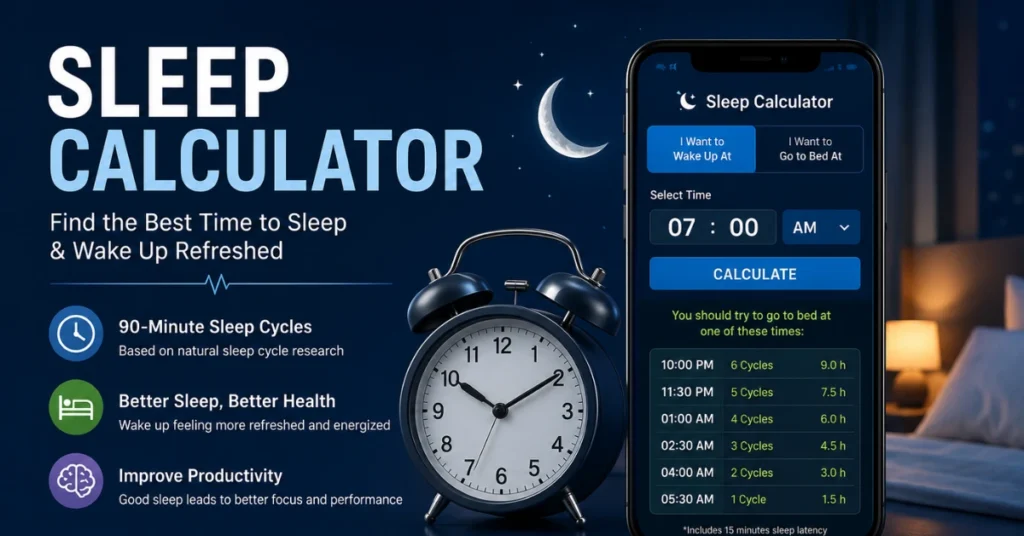
Sleep Calculator showing the best bedtime and wake-up time based on 90-minute sleep cycles.Sleep deprivation has become a global concern, affecting millions of people worldwide. According to organizations such as the World Health Organization (WHO) and the National Sleep Foundation, insufficient sleep is a widespread issue that can impact daily functioning, productivity, and overall well-being.
Modern lifestyle factors, including urbanization, increased screen time, technology use, demanding work schedules, and daily stress, have made it more difficult for many people to maintain a consistent sleep routine. As a result, sleep-related problems have become increasingly common across different age groups and countries.
The purpose of this article is to help you understand how a Sleep Calculator works and how it can assist you in choosing the right time to go to bed and wake up based on your daily schedule.
The Science of Sleep (Universal)
1. Sleep Cycles (90-Minute Rule)
Human sleep follows a series of repeating sleep cycles throughout the night. On average, one complete sleep cycle lasts about 90 minutes, although the exact duration can vary slightly from person to person. This pattern is observed across people worldwide and is commonly used by Sleep Calculators to estimate the best times to fall asleep or wake up.
2. The 4–5 Stages of Sleep
During each sleep cycle, the body progresses through different stages of sleep:
- Light Sleep: The body begins to relax, heart rate slows, and the brain transitions from wakefulness to sleep.
- Deep Sleep: This is the most restorative stage, during which the body repairs tissues, supports immune function, and promotes physical recovery.
- REM (Rapid Eye Movement) Sleep: Most dreaming occurs during this stage. REM sleep plays an important role in memory processing, learning, and brain function.
These stages repeat over 4–5 complete sleep cycles during a typical night’s sleep.
3. Circadian Rhythm and the Biological Clock
The circadian rhythm is the body’s internal biological clock that regulates the sleep–wake cycle over approximately 24 hours. It helps determine when you naturally feel awake or sleepy by responding to environmental cues such as light and darkness. A consistent circadian rhythm supports a regular sleep schedule and healthy sleep patterns.
4. Why Waking Up in the Middle of a Sleep Cycle Causes Grogginess
Waking up in the middle of a sleep cycle—especially during deep sleep—can cause sleep inertia, a temporary state of grogginess, reduced alertness, and slower mental performance. In contrast, waking near the end of a complete sleep cycle generally makes it easier to feel more refreshed and alert after waking.
Recommended Sleep Duration Across Ages
International sleep recommendations from organizations such as the World Health Organization (WHO), the American Academy of Sleep Medicine (AASM), and other global sleep health authorities emphasize that sleep needs vary by age. Getting the recommended amount of sleep helps support normal physical health, cognitive function, and daily performance.
| Age Group | Recommended Sleep Duration (Per 24 Hours) |
|---|---|
| Newborn (0–3 months) | 14–17 hours |
| Infant (4–12 months) | 12–16 hours (including naps) |
| Toddler (1–2 years) | 11–14 hours (including naps) |
| Preschool (3–5 years) | 10–13 hours (including naps) |
| School-Age Children (6–12 years) | 9–12 hours |
| Teenagers (13–18 years) | 8–10 hours |
| Adults (18–64 years) | 7–9 hours |
| Older Adults (65+ years) | 7–8 hours |
Average Sleep Duration in Different Countries
Average sleep duration also varies across countries due to lifestyle, work culture, and daily routines.
| Country/Region | Average Sleep Duration |
|---|---|
| Japan | ~7 hours |
| United States | ~7.1–7.2 hours |
| India | ~7–7.5 hours |
| Europe | ~7.5–8 hours |
How a Sleep Calculator Works
A Sleep Calculator works by using your desired wake-up time to calculate the ideal bedtime based on complete sleep cycles. Since one sleep cycle lasts approximately 90 minutes, the calculator counts backward from your selected wake-up time and suggests bedtime options that align with full sleep cycles rather than interrupting one.
More advanced Sleep Calculators may also consider additional factors such as age, lifestyle, and travel schedules. These factors can help provide sleep recommendations that better match an individual’s daily routine and changing sleep needs.
The calculator can also be used across different time zones, making it useful for international users and travelers. Whether you are following Indian Standard Time (IST), Greenwich Mean Time (GMT), Eastern Standard Time (EST), or other time zones, the calculation method remains the same. You simply enter your preferred bedtime or wake-up time according to your local time zone, and the calculator estimates the most suitable sleep schedule based on complete sleep cycles.
Benefits of Using a Sleep Calculator (Global Perspective)
Using a Sleep Calculator can help people plan their sleep schedule around complete sleep cycles, making it easier to maintain a more consistent sleep routine.
Improved Productivity, Mental Health, and Physical Well-Being
A well-planned sleep schedule can support productivity, mental health, and physical well-being. Waking up at the end of a complete sleep cycle may help improve alertness, concentration, and daily performance while supporting overall physical recovery.
Reduced Risk of Chronic Diseases
Maintaining a healthy sleep routine is associated with a lower risk of several chronic diseases that are common worldwide. Consistently getting the recommended amount of sleep supports overall health and long-term well-being.
Helpful for Travelers, Expats, Shift Workers, and Remote Workers
A Sleep Calculator can also be useful for people with changing schedules, including frequent travelers, expats, shift workers, and remote workers. By planning bedtime and wake-up times according to complete sleep cycles and local schedules, it can help them organize their sleep routine more effectively.
How to Use a Sleep Calculator – Practical Guide
Using a Sleep Calculator is simple. Follow these steps to plan your sleep schedule based on complete sleep cycles.
Step-by-Step Instructions
- Enter your desired wake-up time or bedtime.
- The calculator estimates sleep times based on complete sleep cycles.
- Review the recommended bedtime or wake-up time options.
- Choose the option that best fits your daily schedule.
Different Scenarios
1. 9-to-5 Jobs
If you have a regular 9-to-5 work schedule, enter your required wake-up time. The Sleep Calculator will suggest bedtime options that align with complete sleep cycles to help you plan your nightly routine.
2. Students (Exam Season)
Students preparing for exams can use the calculator to schedule bedtime based on their planned wake-up time, helping them organize study and sleep schedules more effectively.
3. Night Shift, Doctors, and IT Professionals
People working night shifts or rotating schedules, including doctors and IT professionals, can enter their planned sleep or wake-up time after work. The calculator provides sleep timing recommendations based on complete sleep cycles regardless of the time of day.
4. Parents with Young Children
Parents with young children can use the Sleep Calculator to plan available sleep periods around their family’s daily routine by selecting the expected bedtime or wake-up time.
5. Jet Lag for International Travelers
International travelers can use the Sleep Calculator after adjusting to their destination’s local time zone. By entering their target bedtime or wake-up time, they can estimate sleep schedules based on complete sleep cycles while traveling.
Factors Affecting Sleep Worldwide
Many factors can influence sleep quality and sleep schedules around the world. While these factors may vary by region and lifestyle, they commonly affect people across different countries and cultures.
Screen Time and Blue Light
Increased screen time from smartphones, tablets, computers, and televisions has become a global issue. Exposure to blue light before bedtime can affect normal sleep patterns and make it more difficult for some people to fall asleep.
Cultural Differences
Sleep habits differ across cultures and regions.
- Spain and many Latin American countries: Afternoon siestas are part of the daily routine for some people.
- Mediterranean countries: Late dinners are common, which may influence bedtime schedules.
- Some Asian cultures: Early rising is a common daily practice, often shaping earlier sleep and wake schedules.
Caffeine, Alcohol, and Dietary Habits
Consumption of caffeine, alcohol, and different dietary habits varies across countries. These lifestyle choices can influence bedtime routines and overall sleep patterns.
Urban Noise, Pollution, and Stress
Living in urban environments may expose people to noise, pollution, and higher levels of daily stress. These factors can affect sleep quality and make it more challenging to maintain a regular sleep schedule.
Sleep Hygiene Tips (International Applicability)
Good sleep hygiene consists of simple daily habits that can help support a consistent sleep schedule and improve overall sleep quality.
Maintain a Consistent Bedtime Routine
Go to bed and wake up at the same time every day, including weekends whenever possible. A consistent bedtime routine helps maintain a regular sleep schedule.
Create the Right Bedroom Environment
A comfortable sleep environment can support better rest. Keep your bedroom cool, dark, and quiet to minimize distractions during sleep.
Exercise, Sunlight Exposure, and Diet Timing
Regular physical activity, adequate daylight exposure, and appropriate meal timing can help support a healthy sleep routine. Try to maintain consistent times for exercise and meals as part of your daily schedule.
Technology Curfew and Relaxation Techniques
Reduce the use of smartphones, tablets, computers, and other electronic devices before bedtime to limit screen exposure. Relaxation techniques such as meditation and deep breathing exercises can also be included as part of a bedtime routine before going to sleep.
Common Myths About Sleep (Global)
Many beliefs about sleep are common around the world. Understanding these myths can help people make more informed decisions about their sleep habits.
Myth 1: “5–6 Hours of Sleep Is Enough”
A common belief is that 5–6 hours of sleep is sufficient for everyone. In reality, sleep needs vary from person to person, and recommended sleep duration depends on age and individual requirements.
Myth 2: “You Can Catch Up on Sleep Over the Weekend”
Many people believe they can make up for lost sleep by sleeping longer on weekends. While extra sleep may help reduce short-term sleep loss, it does not fully replace a consistent sleep schedule.
Myth 3: “Power Naps and Long Naps Have the Same Effect”
Another common myth is that all naps provide the same benefits. Short power naps and longer naps differ in duration and may affect the sleep schedule differently.
Myth 4: “You Need Less Sleep as You Get Older”
It is often believed that older adults require much less sleep than younger adults. Although sleep patterns may change with age, healthy sleep remains important, and recommended sleep duration continues to vary by age group.